
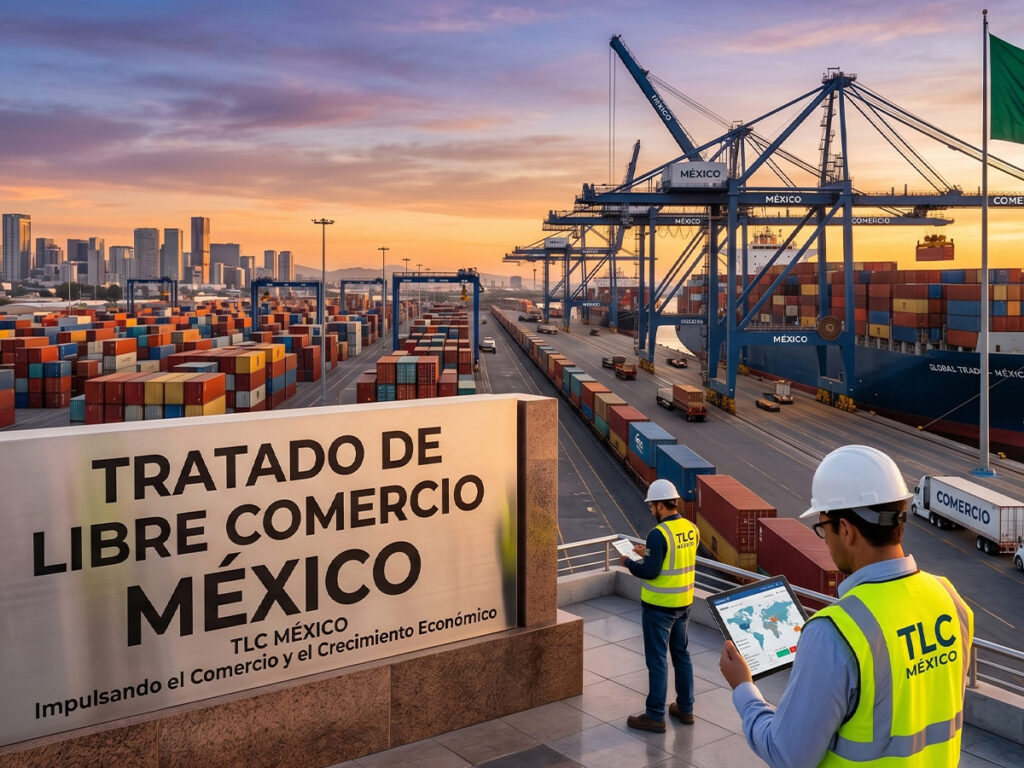
On July 1 , 2020, the new Mexico-United States-Canada Free Trade
Agreement (“TMEC”, known as USMCA in the United States of America and CUSMA in Canada) entered into force and effect, replacing the North American Free Trade Agreement (NAFTA). While the TMEC maintains the legal structure of NAFTA, some chapters have been added incorporating new disciplines and modernizing the scope and protection of trade and investment among its three member countries, such as those related to digital trade, labor, environment, small and medium companies, competitiveness, anti-corruption, good regulatory practices, macroeconomic policy and exchange rate issues.
The TMEC may bring more opportunities for Mexican companies of all sizes, such as the possibility of increasing their exports and boosting their participation in value chains, mainly in North America.
In terms of national treatment and market access, the TMEC updates and includes new trade provisions that ensure greater transparency and certainty in the application of non-tariff trade barriers preventing restrictions on trade. At the same time, the TMEC allows the reduction of costs derived from custom procedures in order to facilitate trade, through the fast movement of goods at borders and by facilitating the control of the logistics chain.
On the other hand, the rules of origin are updated mainly in the following sectors: motor vehicles, textiles and clothing, chemicals, electronics, pharmaceuticals and medical devices, which are aimed to achieve greater integration and competitiveness in the North American region.
Greater controls have been established in the motor vehicle sector and therefore, compliance with new requirements regarding regional content value, labor content value, essential, main and complementary auto parts, as well as origin of steel and aluminum have to be analyzed, considering these changes may have an impact on the financial costs of cross-border transactions.
Under the new TMEC rules, a vehicle produced in the region can be exported (between member countries) duty free when it meets the following conditions: (i) 75% of its contents must come from the North American region (a significant increase from the 62.5% required by NAFTA); (ii) depending on the model, between 40% and 45% of the value of the vehicle must be produced by workers earning at least US$16 dollars per hour, in order to achieve fairer competition in terms of wages and benefits among the three countries; (iii) 70% of the steel and aluminum used in the manufacturing of the vehicles must come from North America; and (iv) the manufacturers of some essential components, such as the engine, transmission and body, must prove a regional content value of 75% that was not previously required by NAFTA. However, exception made of the aforementioned percentage of steel, most of the new rules will be applied gradually.
Another matter of great importance is labor, since, among other issues, it sets forth the workers’ right to free association and collective bargaining through unions; it implements internationally recognized rights under the national legislation of each country, including acceptable conditions on minimum wages, working hours, and occupational safety and health, the incorporation of a mechanism for public communications regarding issues related to the application of said chapter and also, the application of tariffs and the blocking of exports if repeated labor infringements by companies are committed. While no U.S. inspectors will review Mexico’s workplaces, there will be on-site verifications by independent experts selected by each country.
In this regard, the labor reform published in the Official Journal of the Federation on May 1st, 2019, guarantees the implementation of Article 123 of the Mexican Constitution, as well as compliance with the commitments undertaken by Mexico in the negotiations of the TMEC and in the framework of the International Labor Organization.
One of the most innovative aspects of the TMEC is the one related with digital commerce, since TMEC strengthens and promotes its development through a encouraging electronic transactions and, at the same time, providing security for users of electronic media. In addition, it promotes a digital environment that facilitates transactions through secure electronic means and excludes the imposition of custom duties on exported or imported digital products. This chapter makes easier for businesses, especially micro, small and medium-sized ones, to be part of cross-border trade.
On the other side, unlike NAFTA, TMEC has a chapter in which the United States and Canada acknowledge the sovereignty of the Mexican State over its energy resources, reaffirming the direct, inalienable and imprescriptible ownership of Mexico over oil and other hydrocarbons available in its territory, without this meaning that the rules for opening up the energy sector will not be respected, both in terms of hydrocarbons and the generation of electric power.
It should be considered that the TMEC is not only a Treaty that promotes a greater trade exchange, but it is also a free investment Treaty, which should be complemented by public policies that guarantee the rule of law and promote investment, where there are areas of improvement in the current Mexican government.
Finally, a mechanism for reviewing the TMEC is foreseen every six years, which guarantees the measurement of results and benefits for the parties, but can also open fronts that may generate tensions.
For those companies that want to benefit from the TMEC, it is important that they review carefully their operations in order to verify that they are in line with the new provisions of this Treaty and, above all, to ensure that they may benefit from the incorporation of the new chapters as well as to identify what specific advantages or restrictions they may have.
We are at your disposal for any consultation, advice or support you may require in this regard.